
Etel Adnan
Beyond the Landscape

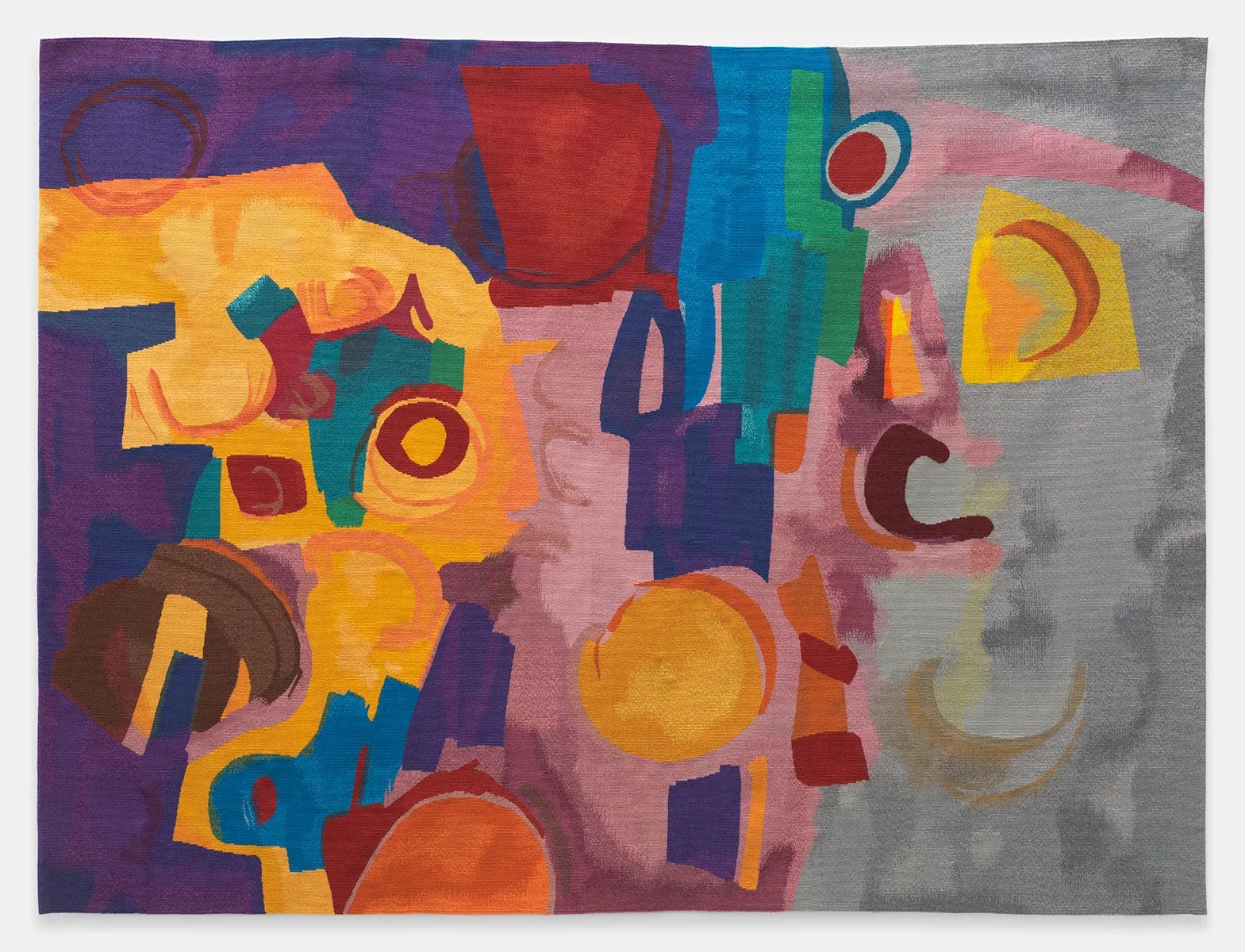
Etel Adnan’s paintings have become some of the most recognisable images in modern Arab art. Their mountains, suns, and fields of colour appear deceptively simple, almost immediate in their clarity. Yet focusing solely on these works risks overlooking the wider intellectual project that occupied Adnan throughout her life.
Across painting, poetry, philosophy, and political writing, Adnan remained preoccupied with how individuals make sense of the world around them. Her practice was shaped by questions that extended far beyond the landscape itself.
Born in Beirut in 1925 to a Greek mother and a Syrian father, Adnan grew up within a multilingual and multicultural environment that would profoundly shape her understanding of language, identity, and belonging. She later studied philosophy in Paris before continuing her education in the United States, eventually teaching philosophy in California.
These experiences exposed her to different intellectual traditions while also sharpening her awareness of the limitations of language itself. Questions of translation, communication, and cultural inheritance would remain central concerns throughout her career.
Adnan came to painting relatively late. Rather than approaching it as a departure from writing, she understood it as another way of thinking. Painting offered a space where ideas could be explored through colour, rhythm, and form rather than words.
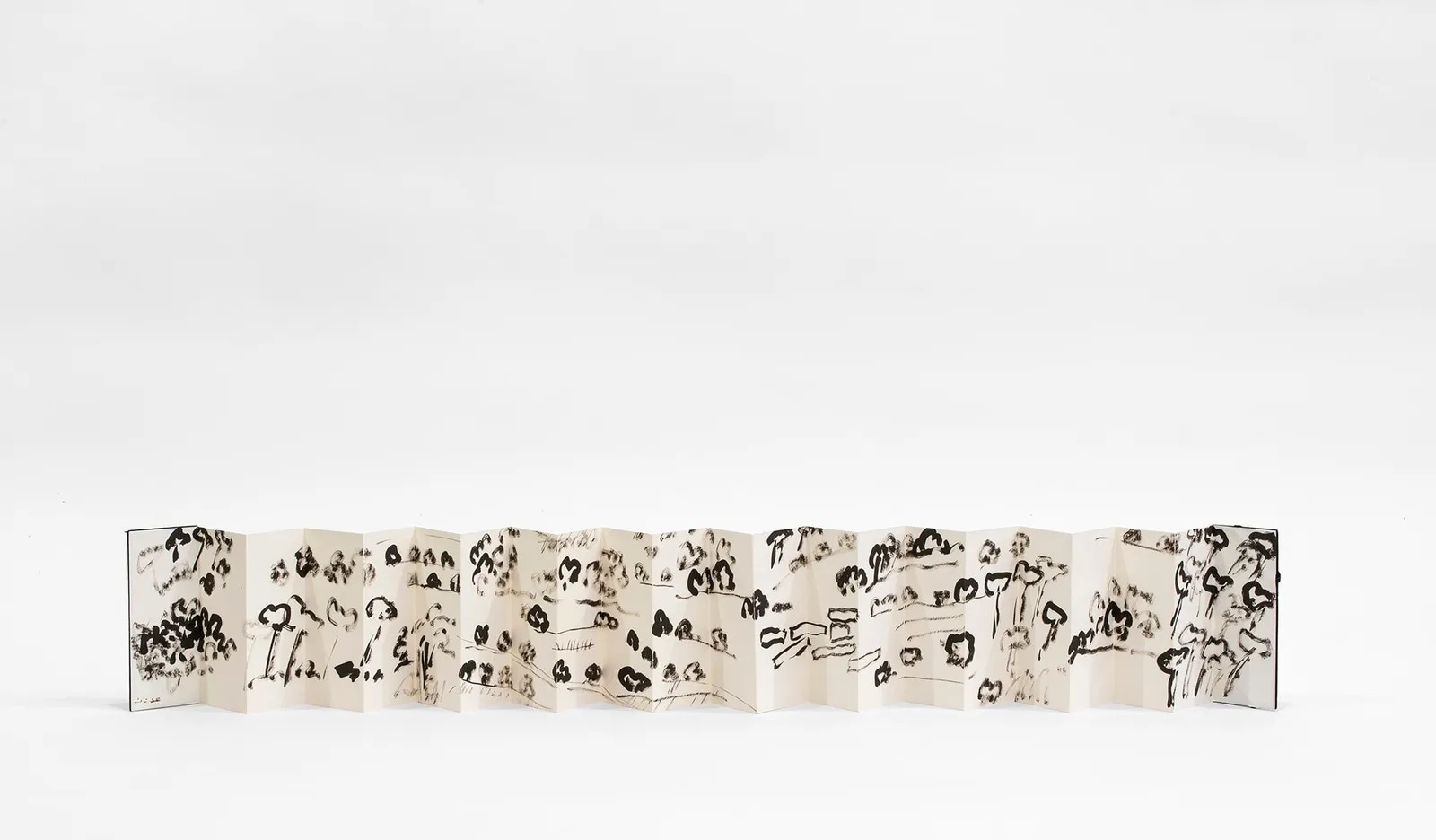
This relationship between visual and written expression can be seen throughout her practice. Alongside her paintings, Adnan produced poetry, essays, novels, and artist books that moved freely between image and text. Her leporellos, folded books that combine writing, drawing, and calligraphic gestures, reflect her tendency to work across disciplines rather than within a single medium.
Throughout her life, Adnan wrote extensively about politics, war, colonial histories, and human experience. These concerns informed her artistic practice, even when they were not directly visible within the work itself. The apparent stillness of her paintings sits alongside a body of writing deeply engaged with the social and political realities of the twentieth century.
Seen in this context, the landscapes begin to function as more than representations of place. They become reflections on perception, presence, memory, and the ways individuals situate themselves within the world.
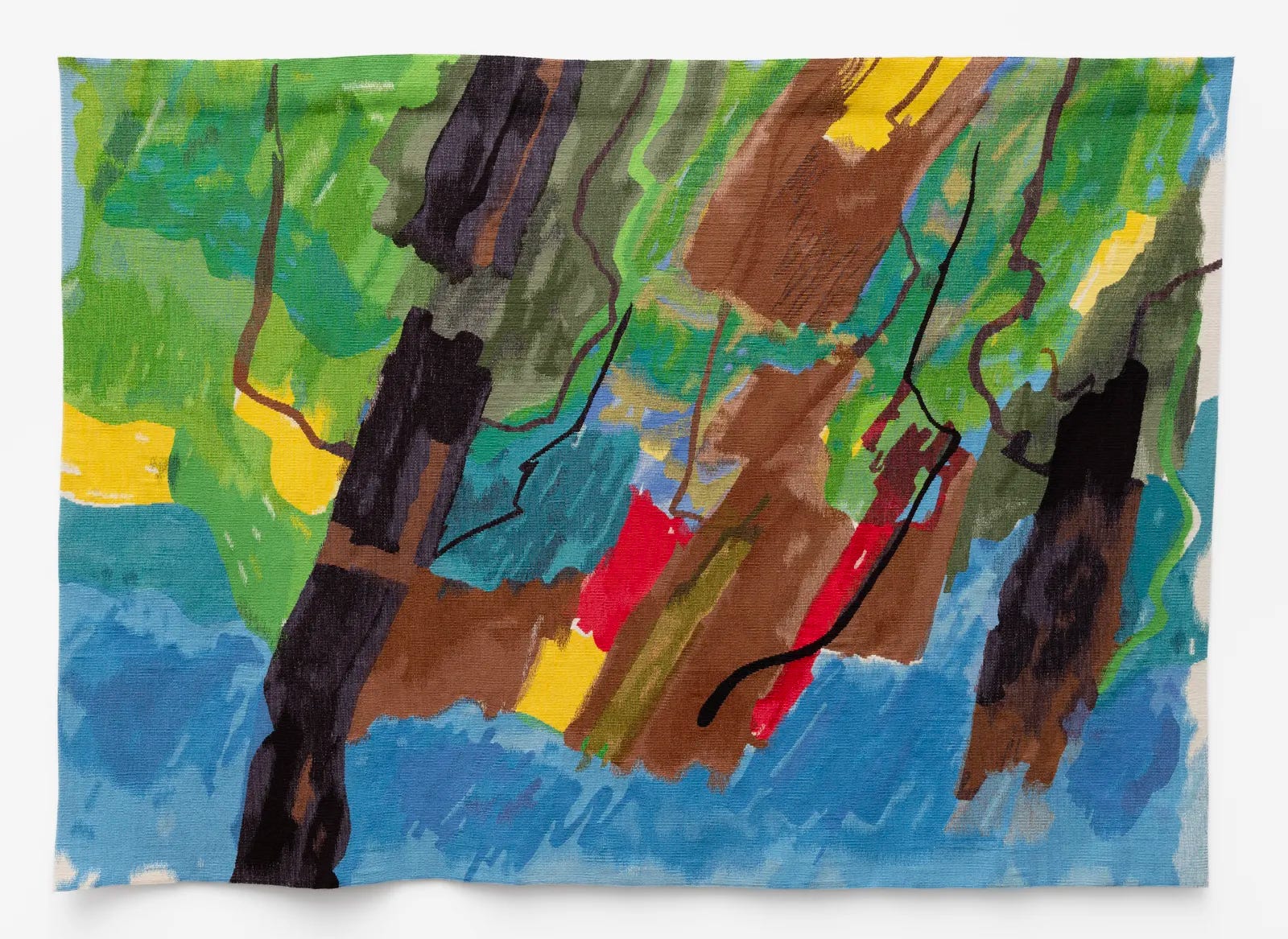
Today, Adnan’s paintings often occupy the centre of conversations surrounding her legacy. Yet her significance lies equally in the relationships she forged between disciplines. Across literature, philosophy, and visual art, she developed a practice grounded in curiosity, observation, and sustained reflection.
Looking beyond the landscape reveals an artist whose work was never confined to a single medium, language, or geography. It reveals a thinker whose creative life was shaped by an ongoing search for ways to understand and articulate human experience.
Cover artwork: Etel Adnan, ‘Equilibre’, 2018, etching, © The Estate of Etel Adnan. Courtesy Galerie Lelong.